Navigating the Legal Landscape: A Comprehensive Guide for Expats Starting a Business in the UK

The United Kingdom has long maintained its reputation as a premier global destination for international entrepreneurs and expatriates seeking to establish commercial enterprises. Despite the tectonic shifts in its geopolitical landscape following Brexit, the UK’s legal framework for business remains robust, transparent, and relatively accessible. However, for an expatriate, the transition from an aspiring founder to a legally compliant business owner involves navigating a multifaceted maze of immigration laws, corporate regulations, and fiscal responsibilities. This article provides a deep dive into the legal requirements for expats starting a business in the UK, ensuring a foundation for sustainable growth.
1. Establishing the Right to Work: Visa Requirements




The foremost hurdle for any expatriate is securing the legal right to reside and conduct business activities in the UK. Since the end of free movement for EU citizens, the UK has implemented a points-based immigration system that treats EU and non-EU citizens equally.
For entrepreneurs, the primary route is the Innovator Founder Visa. Introduced to replace the previous Innovator and Start-up tiers, this visa is designed for individuals seeking to establish a business that is innovative, viable, and scalable. Unlike its predecessors, it no longer requires a minimum investment of £50,000, but the business idea must be endorsed by an approved body.
Alternative routes include the Global Talent Visa, aimed at leaders or potential leaders in fields such as digital technology, and the High Potential Individual (HPI) Visa, available to graduates from top-ranking global universities. It is imperative to note that the Skilled Worker Visa allows for secondary business activity under very specific conditions, but it is generally not a primary route for full-time entrepreneurs. Failure to align your business activities with your visa conditions can lead to severe legal repercussions, including deportation and a ban on future entry.

2. Selecting a Legal Structure
Choosing the appropriate legal structure is a critical decision that impacts tax liability, personal asset protection, and administrative burdens. Expats typically choose between three main entities:
- Private Limited Company (Ltd): This is the most common choice for expats. A limited company is a separate legal entity from its owners. This means the directors and shareholders have ‘limited liability,’ protecting their personal assets from business debts. It requires registration with Companies House and is subject to Corporation Tax.
- Sole Trader: This is the simplest form of business. You are the business. While it offers minimal administrative overhead, the primary disadvantage is unlimited liability. As an expat, you are personally responsible for all business debts, which can be risky when navigating a foreign legal system.
- Limited Liability Partnership (LLP): Often used by professional services (lawyers, accountants), an LLP combines the flexibility of a partnership with the limited liability of a company.
- Corporation Tax: Limited companies must pay Corporation Tax on their profits. You must register for this within three months of starting to do business.
- Value Added Tax (VAT): If your taxable turnover exceeds the current threshold (currently £90,000 per annum), VAT registration is mandatory. Some businesses choose to register voluntarily even if they are below the threshold to reclaim VAT on business expenses.
- Pay As You Earn (PAYE): If you plan to hire employees (including yourself as a director), you must register for PAYE to collect Income Tax and National Insurance contributions from salaries.
- Self-Assessment: Even as a director of a limited company, you will likely need to file a personal Self-Assessment tax return for any dividends or salary you receive.
3. Statutory Registration and Companies House
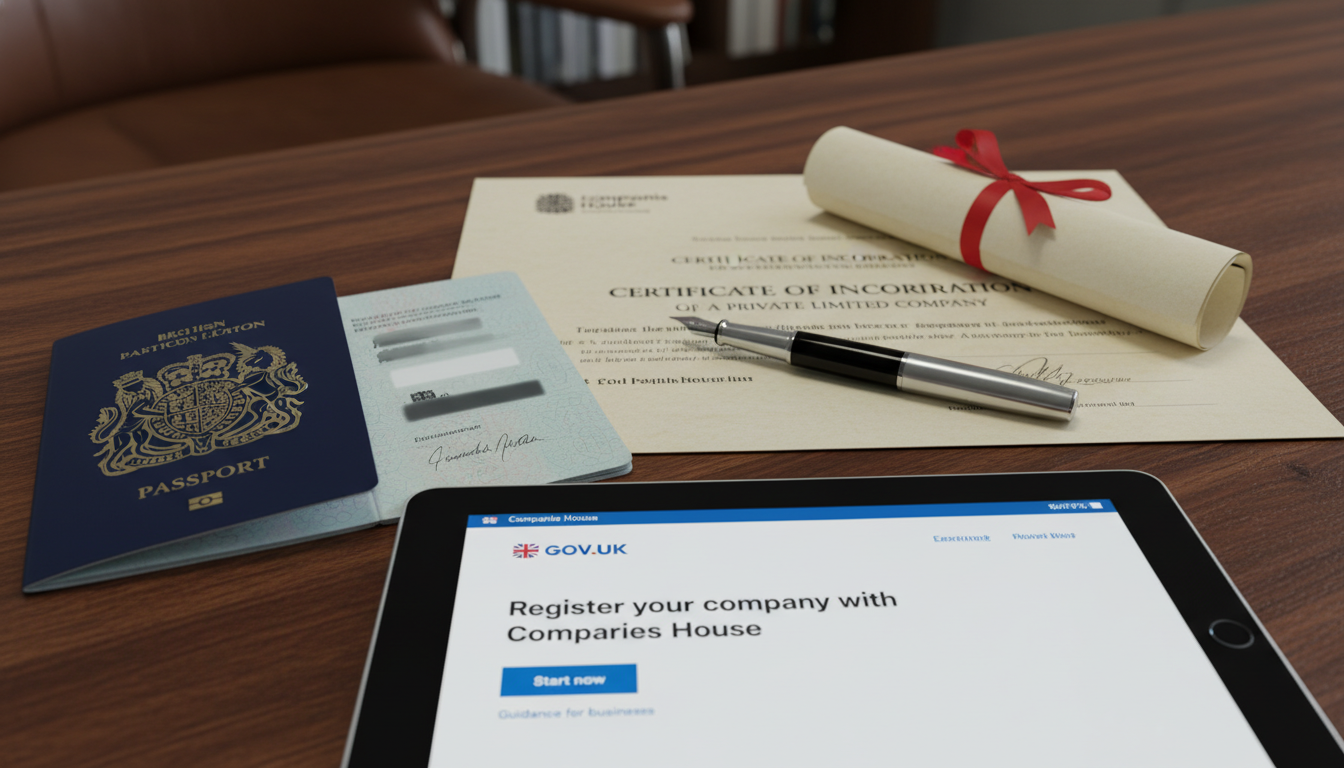
If you opt for a Limited Company or an LLP, you must register (incorporate) with Companies House. This process requires several key components:
1. A Unique Company Name: It must not be offensive or too similar to existing names.
2. Registered Office Address: This must be a physical address in the UK where official mail can be sent. Many expats use their accountant’s office or a virtual office service if they do not yet have a physical premises.
3. Directors and Secretary: A limited company must have at least one director (who can be a non-UK resident, though having a UK-resident director simplifies many processes, such as banking).
4. Articles of Association: This document outlines the rules for running the company.
5. Shareholders and Share Capital: You must declare the initial shareholdings and the value of the shares.
4. Fiscal Compliance and HMRC
All businesses in the UK must register with HM Revenue and Customs (HMRC). The tax landscape for expats is complex and involves several distinct layers:
5. The Challenge of Business Banking
One of the most significant practical hurdles for expatriates is opening a UK business bank account. UK banks are subject to stringent Anti-Money Laundering (AML) and Know Your Customer (KYC) regulations. If the company directors are not resident in the UK, many traditional high-street banks may decline the application.
Expats often find success with ‘challenger’ or digital banks (such as Revolut Business, Tide, or Monzo), which often have more streamlined processes for international founders. Nevertheless, be prepared to provide extensive documentation, including proof of ID, proof of address, and a detailed business plan.
6. Employment Law and Intellectual Property
If your UK business involves hiring staff, you must adhere to the Employment Rights Act 1996. This includes providing a written statement of employment particulars, ensuring the National Minimum Wage is met, and complying with workplace pension auto-enrolment duties.
Furthermore, protecting your Intellectual Property (IP) is vital. You should register trademarks, patents, or designs with the UK Intellectual Property Office (IPO). Since Brexit, EU trademarks no longer provide automatic protection in the UK, necessitating separate UK filings to ensure your brand is legally safeguarded within the British market.
7. Data Protection (UK GDPR)
Compliance with data protection laws is non-negotiable. The UK GDPR and the Data Protection Act 2018 govern how you collect and process personal data. If your business handles customer information, you may need to register with the Information Commissioner’s Office (ICO) and pay a data protection fee. Failure to comply can result in astronomical fines that could bankrupt a fledgling enterprise.
Conclusion
Starting a business in the UK as an expatriate is a rewarding but legally demanding endeavor. While the UK remains a ‘pro-business’ jurisdiction, the margin for error in legal compliance is narrow. Success requires a proactive approach: securing the correct visa, choosing a robust corporate structure, and maintaining meticulous financial records. Given the complexities of the post-Brexit regulatory environment, it is highly recommended that expatriates seek professional legal and accounting advice early in the process. By ensuring that every legal box is checked, you can shift your focus from administrative survival to commercial thriving in one of the world’s most dynamic markets.